
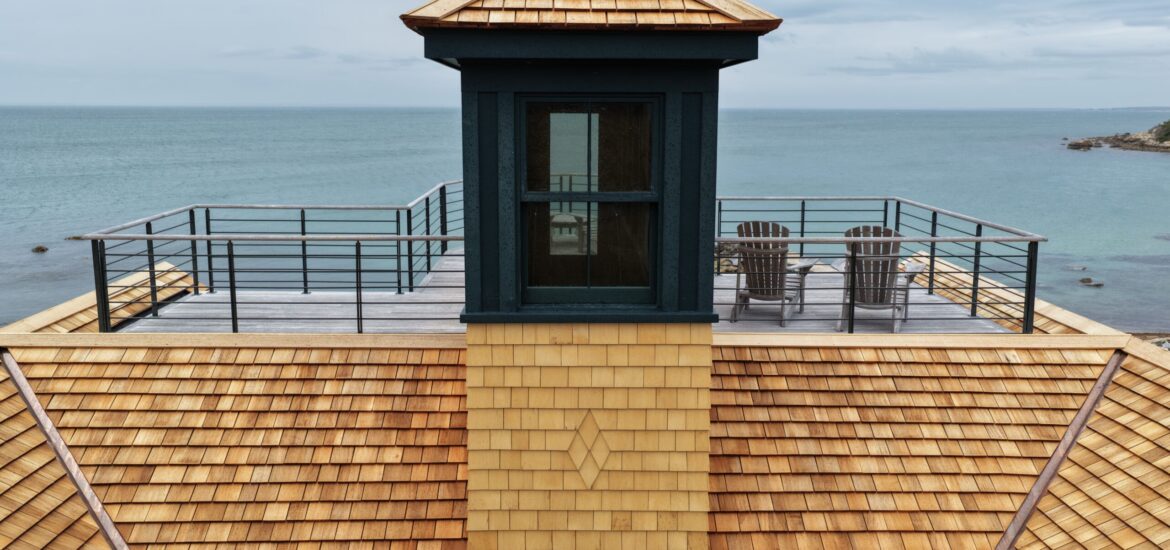
Coastal homes on Cape Cod face a unique set of environmental demands: salt-laden winds, rapid humidity shifts, freeze-thaw cycling, and intense seasonal UV exposure. Delivering exteriors that perform reliably under these conditions requires more than premium materials—it demands engineered installation protocols, material compatibility expertise, and disciplined project execution. For homeowners seeking the best roofing and siding company on Cape Cod, the difference lies not in marketing claims but in measurable installation standards, ventilation science, and transition detailing that protect a home for decades. This article breaks down the technical principles, material selections, and craftsmanship standards that define resilient coastal exteriors—and how they translate into lasting confidence for homeowners in Orleans, Chatham, Hyannis Port, Woods Hole, and Plymouth.
Asphalt Roofing: Engineered Protection for Complex Coastal Geometries
Modern architectural asphalt shingles have evolved far beyond basic weather barriers. Premium dimensional profiles utilize a fiberglass-reinforced core saturated with polymer-modified asphalt, topped with ceramic-coated mineral granules that deliver Class 4 impact resistance, 130+ mph wind ratings, and enhanced UV reflectivity. For coastal applications on Cape Cod, we specify shingles with algae-resistant copper granules and reinforced sealant strips to withstand salt aerosol exposure and thermal cycling.
Critical installation protocols include:
- Continuous ice-and-water shield membrane across eaves, valleys, and penetrations, extending 24″ past interior wall lines to prevent wind-driven rain intrusion
- Woven valley construction to eliminate exposed fasteners and reduce thermal bridging at vulnerable intersections
- Step flashing integration using 20-oz galvanized steel or copper, interlaced with each shingle course and sealed with elastomeric compound to accommodate differential movement
- Ridge ventilation calibrated to maintain balanced attic pressure and reduce condensation risk during coastal temperature inversions
When properly installed, architectural asphalt roofing delivers 40–50 years of reliable service with minimal maintenance. The dark charcoal profiles commonly selected on Cape Cod create deliberate visual contrast with cedar siding and white trim, reinforcing classic coastal character without sacrificing engineered performance.
Cedar Siding: Natural Durability Meets Precision Craftsmanship
Natural cedar remains the definitive cladding choice for New England coastal architecture, and its dominance is rooted in measurable performance characteristics. White cedar’s cellular structure contains natural extractives—thujaplicins and other compounds—that act as built-in biocides, resisting fungal colonization and insect activity without chemical treatments. Its low shrinkage coefficient minimizes seasonal warping, a critical advantage where humidity can swing 40% within a single week.
Our installation protocol prioritizes long-term moisture management:
- Kiln-dried, vertical-grain shingles at 12–14% moisture content, matched to Cape Cod’s equilibrium levels to reduce post-installation expansion stress
- Consistent 1/8″ back-ventilation gaps behind each course to establish a continuous drainage plane that allows capillary moisture to escape
- 316-grade stainless steel ring-shank fasteners driven to controlled depths that prevent fiber crushing while maintaining structural holding power
- Hand-woven corners that eliminate vulnerable vertical seams without relying on sealants that degrade under UV exposure
Over 12–24 months, UV exposure transitions cedar to a uniform silver-gray patina—a self-maintaining protective layer that enhances moisture resistance while preserving structural integrity. Painted cedar systems add an additional protective barrier while maintaining the wood’s natural breathability when installed with proper primers and elastomeric topcoats.
Integrated Systems: Where Materials Meet Method
Resilient coastal exteriors succeed when components function as a unified system rather than isolated upgrades. Asphalt roofing manages dynamic water shedding and thermal stress; ventilated cedar cladding provides breathable protection that releases trapped moisture; precision flashings accommodate differential movement between materials; and graded site work directs runoff away from the foundation. Each element reinforces the others.
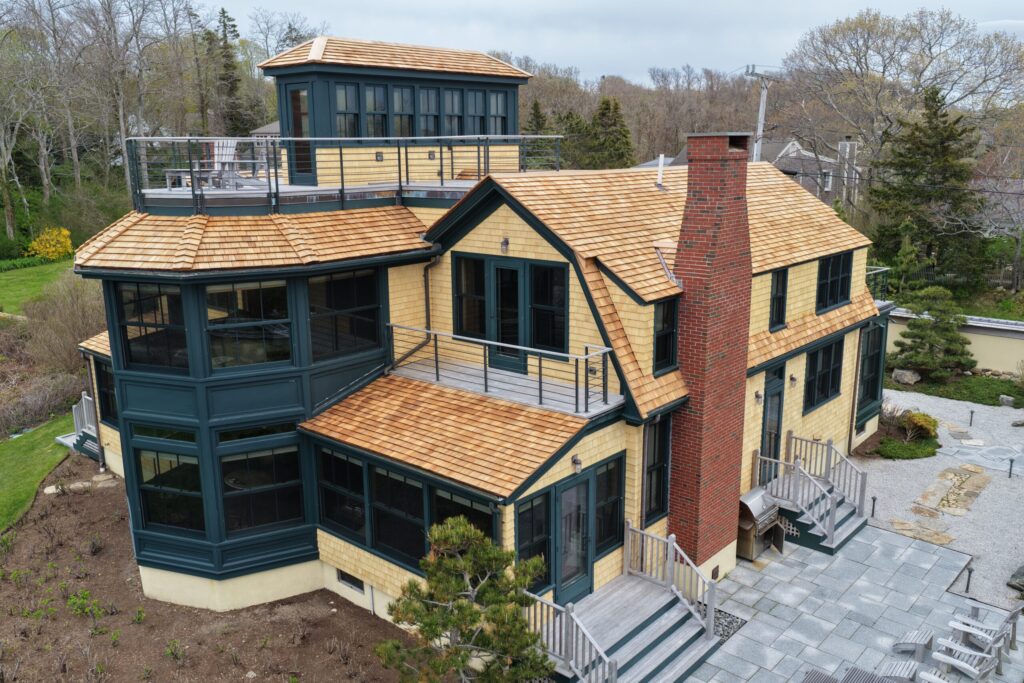
Transition detailing is where many coastal projects succeed or fail. The junction where cedar siding meets asphalt roofing, where metal flashing integrates with masonry chimneys, or where flat EPDM sections connect to pitched shingle planes requires custom engineering. We design these transitions with layered protection: continuous weather-resistive barriers, redundant sealant joints at non-movable termination points, and mechanical fastening that allows thermal movement without compromising the weather seal.
Maintenance expectations are straightforward but critical:
- Bi-annual debris clearance in roof valleys and around penetrations to prevent moisture retention during storm events
- Gentle low-pressure rinsing of cedar siding to remove salt crystallization without stripping natural extractives
- Annual verification of flashing integrity, fastener exposure, and drainage path functionality
- Inspection of paint film condition on painted cedar every 3–5 years with touch-up as needed
With proper stewardship, a thoughtfully engineered exterior will reliably exceed 40 years of service in Cape Cod’s marine climate—aging gracefully while maintaining performance.
Local Expertise: Why Cape Cod Demands Specialized Knowledge
Cape Cod’s coastal environment is not generic. Salt aerosols accelerate corrosion on standard fasteners. Wind-driven rain exploits microscopic gaps that inland projects might tolerate. Freeze-thaw cycles test the flexibility of sealants and the adhesion of coatings. UV intensity during summer months degrades materials faster than in shaded or northern locations.
This is why local experience matters. Teams familiar with Cape Cod understand:
- Which fastener grades resist salt-air corrosion long-term
- How to adjust shingle exposure rates based on slope pitch and prevailing wind vectors
- When to schedule painting or sealing operations around humidity thresholds
- How to detail transitions between dissimilar materials to accommodate differential expansion
Homeowners investing in exterior renovations deserve partners who bring this contextual knowledge to every decision—not just material selection, but installation sequencing, weather monitoring, and quality verification.
The Result: Confidence That Lasts
A well-executed coastal exterior does more than protect a structure. It preserves architectural character, enhances curb appeal, and reduces long-term maintenance burdens. It allows homeowners to focus on living—not worrying about leaks, warping, or premature degradation.
Every project we complete on Cape Cod reflects a commitment to three principles: reliable performance, thoughtful craftsmanship, and respect for the coastal environment. Whether replacing a roof, upgrading siding, or coordinating a full exterior transformation, the goal remains the same: deliver an exterior that performs as beautifully as it endures.
If you’re considering an exterior renovation on Cape Cod and value precision, transparency, and lasting results, we invite you to learn more about our approach and portfolio. Reliable. Affordable. Fair. Every exterior tells a story—we help ensure yours endures.